







INDUSTRY INFORMATION
Industry News




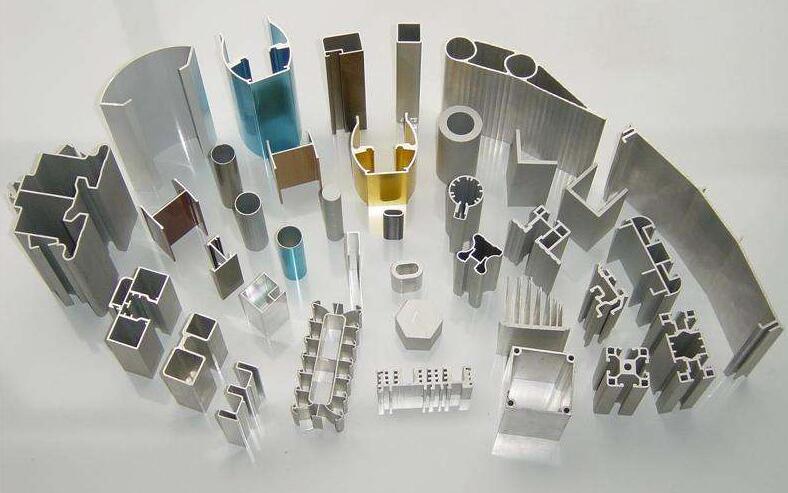
To accelerate the alkaline etching rate of aluminum profiles, one can add sodium nitrate or sodium nitrite to an alkaline etching solution based on sodium hydroxide, along with additives such as sodium gluconate. In addition, factors such as bath concentration, temperature, and etching time also influence the rate of alkaline etching of industrial aluminum profiles, and it is important to learn how to control these factors.
Bath Concentration
When sodium hydroxide is dissolved in water, it forms an alkaline solution, which is commonly used as the chemical cleaning bath solution for aluminum profiles—this is known as the alkali etching solution. In the alkali etching solution, sodium hydroxide exists primarily in the form of free ions. As the concentration of sodium hydroxide rises to 250 g/L, the etching rate of industrial aluminum profiles also increases accordingly. Thus, it’s clear that the higher the concentration of sodium hydroxide in the bath solution, the faster the etching rate will be. However, many companies today, in order to cut costs, keep the sodium hydroxide content within the range of 50 to 100 g/L. To control the sodium hydroxide content, one can add longevity additives—such as gluconates—to the bath solution, thereby keeping the concentration of free sodium hydroxide within the range of 70 g/L.
Aluminum dissolution amount
Place the aluminum profile into an alkaline solution of sodium hydroxide. The aluminum will undergo a chemical reaction with the sodium hydroxide, forming aluminum hydroxide. Due to the effect of the reaction products, the corrosion rate of the aluminum will decrease. Experiments have shown that when the aluminum dissolution level is 26 g/L and the sodium hydroxide concentration is 50 g/L, the higher the temperature, the slower the corrosion rate of the aluminum. Thus, under the condition that the bath solution concentration remains constant, the higher the aluminum dissolution level, the slower the corrosion rate—meaning that the aluminum dissolution level is inversely proportional to the corrosion rate. To determine the appropriate aluminum dissolution level through calculation, carefully monitor changes in the bath solution and adjust the aluminum dissolution level within the specified range according to the actual situation.
Tank solution temperature
Through experiments conducted on 6063 aluminum profiles, we concluded that as the temperature of the槽液 (tank solution) rises, the rate of alkaline etching of aluminum also increases rapidly. For every 10℃ increase in temperature, the rate of the aluminum etching reaction doubles. Therefore, the higher the temperature, the faster the aluminum profile is etched by the alkaline solution—meaning that the temperature of the tank solution is directly proportional to the etching rate. This phenomenon occurs because the etching of aluminum profiles in an alkaline etching solution is an exothermic reaction, releasing heat at a rate of 20 kW/m². Typically, it is necessary to install a cooling system with sufficient cooling capacity to maintain the tank solution temperature within the range of 50–60℃². In winter, this same system can also serve as a heating device.
Etching time
In the alkali etching process, the longer the etching time for industrial aluminum profiles, the greater the weight loss due to aluminum dissolution. However, etching time is not directly related to etching rate. Shortening the etching time can only reduce the weight loss caused by aluminum dissolution and decrease the consumption of alkali etching agents; it is not proportional to the etching rate. If you want to obtain a smooth surface on aluminum profiles, you can first use mechanical brushing or sandblasting for pre-processing, or achieve a bright and smooth finish by improving mold quality and enhancing the extrusion process quality.

 鄂公网安备42062502000047