







INDUSTRY INFORMATION
Industry News





As a building and interior decoration material, aluminum composite panels have quickly won high praise from users thanks to their high-quality decorative performance. However, for those who are not in the industry, their understanding of aluminum composite panels may be limited. What are the common types of aluminum composite panels, and what are their advantages? Today, we’ll take a detailed look at these questions.
Aluminum fluorocarbon single panels. In outdoor environments characterized by complex conditions—such as high-temperature baking, severe wind and rain, frequent acid rain, and salt spray—only fluorocarbon aluminum single panels can withstand these harsh weather challenges and remain steadfastly reliable in architectural applications. These fluorocarbon aluminum single panels have been meticulously coated and thoroughly tested before leaving the factory. Even when exposed promptly to extremely adverse external conditions, their surfaces will not exhibit any powdery paint film. They boast practical advantages such as excellent durability and strong corrosion resistance.
Wood-grain aluminum composite panels. More and more people are drawn to wood-inspired decor styles for both home and office interiors, fulfilling their aesthetic aspirations. Returning to nature, where everything is simple and unpretentious, wood-imitation colors create a natural decorative ambiance that exudes comfort and relaxation. Zhengyi Building Materials’ aluminum composite panels feature rich, vivid wood grain patterns with clear, natural textures. Under prolonged exposure to sunlight, these panels remain colorfast, crack-free, non-peeling, and dimensionally stable. They boast excellent resistance to aging and weathering. They are widely used in the interior and exterior decoration of subways, high-speed railway stations, airports, large shopping malls, corridors, leisure venues, public health facilities, building facades, office buildings, hotels, commercial centers, and convention centers.
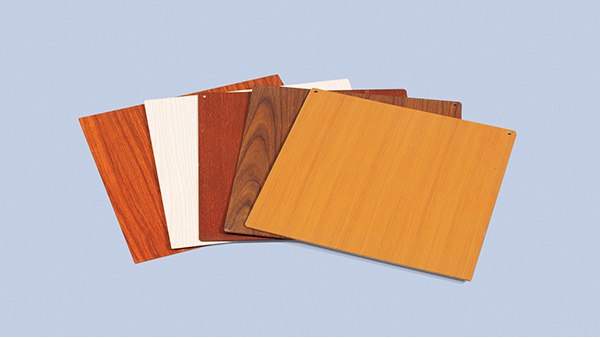
Colored aluminum composite panels. The colors of aluminum composite panels are not limited to white, gray, red, yellow, and the like; they can also include shades reminiscent of wood and stone. Through various processing techniques, desired patterns and colors are applied to the surface of the double-layer aluminum panel, allowing architects to fully unleash their creativity. Aluminum composite panel manufacturers have developed a multi-color fluorocarbon coating process, resulting in dual-color aluminum composite panels. These panels have been used outdoors for over a decade, overcoming the limitations of traditional multi-color screen-printing techniques, which typically fade within three months when exposed to outdoor conditions. Multi-color aluminum composite panels are now widely used in outdoor curtain walls, interior curtain walls, ceilings, cinemas, hospitals, and other similar applications.
Architectural aluminum composite panels. In the selection of decorative materials for many large public venues or major buildings, plastic-aluminum veneers—being movable and replaceable—are highly favored by developers. To ensure that each construction project has a unique appearance, Shuangou offers customers a wide range of design styles, materials, and colors for plastic-aluminum composite panels. These panels can be processed into various shapes and easily customized with recesses, protrusions, curves, and other features. They provide architects with invaluable design inspiration and a visual feast. Plastic-aluminum panels possess high artistic value and promising prospects, offering exceptional aesthetic performance.

 鄂公网安备42062502000047