







INDUSTRY INFORMATION
Industry News


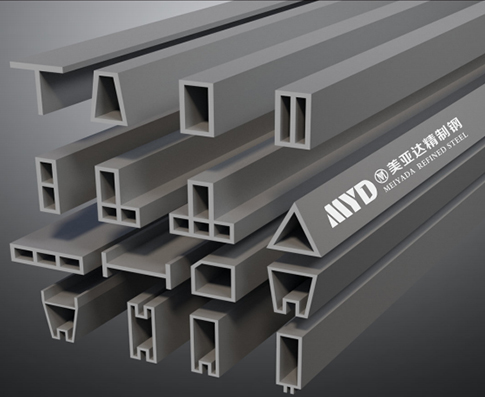



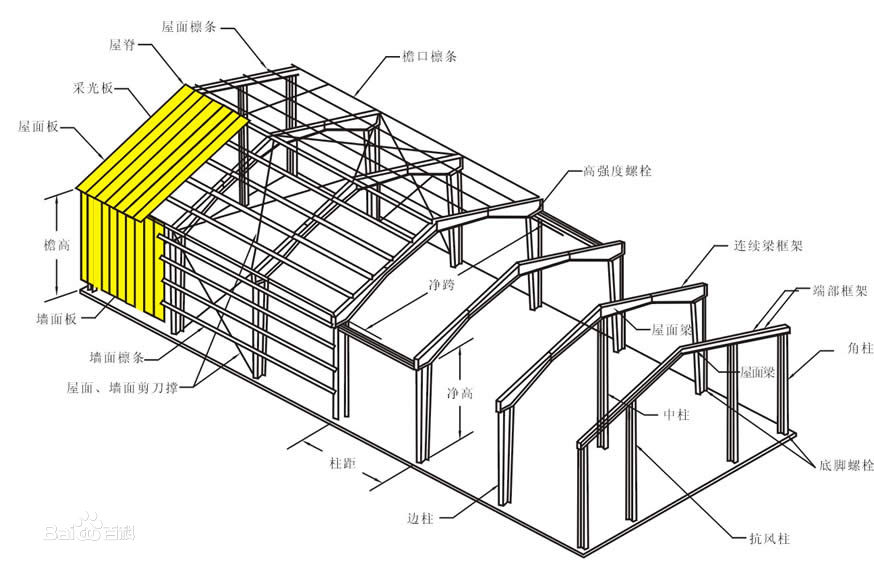
Steel structures are structures composed of steel materials and represent one of the primary types of architectural structures. These structures mainly consist of components such as beams, steel columns, and steel trusses made from structural steel profiles and steel plates. They undergo rust removal and anti-corrosion treatments including silanization, pure manganese phosphating, water washing and drying, and galvanizing. Typically, connections between components or parts are achieved through welds, bolts, or rivets. Due to their light weight and ease of construction, steel structures are widely used in large-scale industrial buildings, sports venues, and ultra-high-rise buildings, among other applications.
Steel is characterized by high strength, light weight, good overall rigidity, and strong deformation capacity, making it particularly suitable for constructing large-span, ultra-high, and ultra-heavy buildings. The material exhibits excellent homogeneity and isotropy, behaving as an ideal elastic body that closely matches the basic assumptions of general engineering mechanics. It has good plasticity and toughness, allowing for significant deformation and effectively resisting dynamic loads. Construction periods are short, and the material boasts a high degree of industrialization, enabling highly mechanized and specialized production.
Steel structures should explore the use of high-strength steels to significantly increase their yield strength. In addition, new types of structural steel profiles—such as H-beams (also known as wide-flange beams) and T-beams—as well as profiled steel sheets—should be developed to meet the demands of large-span structures and super-tall buildings.
There is also a thermal-break lightweight steel structure system. Although the building itself is not energy-efficient, this technology uses ingenious specialized connectors to effectively address the issue of thermal bridges in the building. The small truss structure allows cables and water pipes to pass through the walls easily, making construction and decoration more convenient.
Characteristics of Steel Structures
1. High material strength and light self-weight
Steel has high strength and a high modulus of elasticity. Compared to concrete and wood, it has a relatively low ratio of density to yield strength; therefore, under the same loading conditions, steel structures can use smaller cross-sections for their components, resulting in lighter self-weight, easier transportation and installation, and making them particularly suitable for structures with large spans, great heights, and heavy loads.
2. Steel exhibits good toughness and ductility, with uniform material properties and high structural reliability
It is suitable for withstanding impact and dynamic loads and boasts excellent seismic performance. The internal microstructure of steel is uniform, making it nearly isotropic and homogeneous. The actual working performance of steel structures closely matches the theoretical calculations. Therefore, steel structures have high reliability.
3. High degree of mechanization in steel structure fabrication and installation
Steel structural components are easy to fabricate in factories and assemble on-site. Factory-based mechanized fabrication ensures high precision and efficiency in producing steel components, while on-site assembly is fast and shortens construction periods. Steel structures represent the most highly industrialized type of construction.
4. Good sealing performance of steel structures
Because welded structures can achieve complete sealing, they can be used to manufacture high-pressure vessels, large oil tanks, pressure pipelines, and other components that offer excellent air-tightness and water-tightness.
5. Steel structures are heat-resistant but not fire-resistant
When the temperature is below 150℃, the properties of steel change very little. Therefore, steel structures are suitable for hot workshops; however, when the surface of the structure is exposed to thermal radiation around 150℃, it must be protected with insulating panels. At temperatures between 300℃ and 400℃, both the strength and modulus of elasticity of steel decrease significantly. Around 600℃, the strength of steel approaches zero. In buildings with special fire protection requirements, steel structures must be protected with fire-resistant materials to enhance their fire rating.
6. Steel structures have poor corrosion resistance
Especially in environments with high humidity and corrosive media, steel structures are prone to rusting. Generally, steel structures need to be de-rusted, galvanized, or coated, and require regular maintenance. For offshore platform structures located in seawater, special corrosion protection measures such as “zinc block anodic protection” must be employed.
7. Low-carbon, energy-saving, environmentally friendly, and reusable
Demolition of steel structure buildings produces almost no construction waste, and the steel can be recycled and reused.

 鄂公网安备42062502000047