







INDUSTRY INFORMATION
Industry News





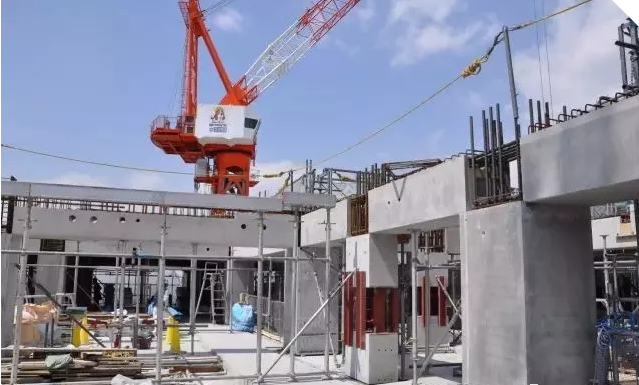
China is vigorously promoting the development of prefabricated buildings. The central government and local governments across the country have frequently introduced policies to encourage this sector, offering subsidies for green buildings and prefabricated structures, thereby opening up significant market potential for the prefabricated building industry.
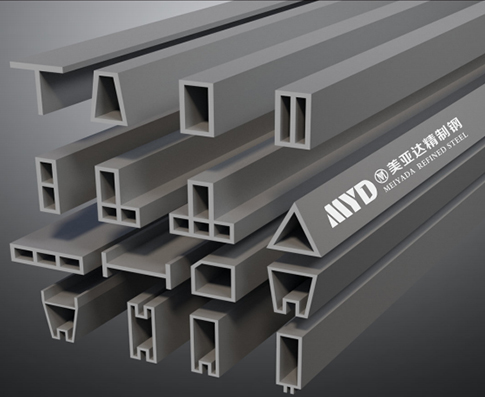
Compared to traditional reinforced concrete structures, steel-structure residential buildings are lighter in weight, accounting for only 50%-60% of the weight of reinforced concrete residences. They feature smaller beam and column sections, higher space utilization, and an 8% increase in usable floor area compared to conventional reinforced concrete homes. Thanks to standardized prefabricated construction methods, the construction period is significantly shorter—reducing the construction time by 33% compared to traditional methods. These numerous advantages make prefabricated steel structures the future trend in the housing industry.
Hubei Province’s Prefabricated Building Goals
By 2020, the proportion of prefabricated building area to newly built building area in Wuhan City will reach over 35%; in Xiangyang City, Yichang City, and Jingmen City, it will reach over 20%; and in other prefecture-level cities, Enshi Prefecture, directly-administered cities, and Shennongjia Forestry District, it will reach over 15%. By 2025, the proportion of prefabricated buildings to newly built building area across the entire province will reach over 30%.
Two categories of projects will all adopt prefabricated construction:
1. Starting from July 1, 2017, all newly built public rental housing across the province will be fully furnished using prefabricated construction methods.
2. By 2020, newly built residential buildings in Wuhan City, Xiangyang City, Yichang City, and Jingmen City will all achieve full furnishing of residential units.
Prefabricated building design shall comply with current codes and seismic requirements. Supplementary calculations have been performed for components under various conditions—including production, transportation, and lifting—as well as for their connections, ensuring safety and reliability.
In the design process, through simulations using various computational models and diverse, comprehensive physical experiments, and backed by extensive project experience both domestically and internationally, we’ve demonstrated that the quality and safety of these buildings can withstand rigorous testing, and the technology is mature and reliable.
Because a large number of prefabricated building components are manufactured in factories, quality control over these components is significantly superior to that of traditional cast-in-place construction involving wet processes on-site.
Compared to cast-in-place construction, prefabricated buildings can shorten the overall construction period—typically by 2 to 3 months for high-rise residential buildings. During the main structural construction phase, the construction time is roughly the same as that of cast-in-place buildings. However, during the decoration and finishing phase, significant reductions in construction time can be achieved through features such as eliminating plastering, using integrated exterior wall systems (which combine exterior finishes, doors and windows, insulation, and exterior walls into a single prefabricated unit), shortening formwork removal times, and allowing indoor decoration work to proceed concurrently with other stages.
Cost control is primarily focused on the design phase. Architectural plan and elevation designs should adhere to principles of regularity and simplicity; component designs should be standardized, simplified, and integrated; aspects such as curtain walls, doors and windows, railings, and interior finishes should be considered in advance. Factors such as the number of times molds are reused, the number of connecting sleeves, component weights, tower crane selection, and the length of connection joints all directly impact costs.
In the production and construction phases, improvements in processes, construction methods, and tools have played a positive role in enhancing efficiency, reducing labor requirements, and controlling costs.
Prefabricated exterior walls for modular buildings can also achieve a wide variety of facade decoration effects. Through factory-based production, using the reverse-casting technique, facing bricks, stones, and other decorative materials are cast in one go with the exterior wall at the factory. Additionally, concrete exterior finishes can be shaped into various textures—such as raised and recessed patterns, stripes, or intricate designs—resulting in facades that are rich and visually diverse.
Prefabricated buildings are the tangible manifestation of the assembly-based construction phase within the industrialization of the construction sector. They are buildings assembled on-site from prefabricated components and parts produced in factories. The entire process should encompass standardized design, factory-based manufacturing, assembly-based construction, integrated interior finishing, information-based management, and intelligent applications. Prefabricated buildings offer advantages such as stable quality, low energy consumption and reduced pollution, high production efficiency, fewer safety accidents, lower labor intensity, and improved working conditions. Prefabricated buildings are proven to be reliable and safe.
A key technology for earthquake resistance is the connection technology for prefabricated joints. The technology currently used predominantly in Beijing was first developed in the 1970s in the United States and introduced to Japan in 1972. In this method, sleeves are precast inside structural members, while the reinforcing bars at the other end are connected on-site using high-strength grouting material.
The rebar-to-rebar sleeve connection technology has been extensively practiced in Japan and the United States over the past century, including studies on sleeve stress-strain curves and cyclic tensile fatigue tests. After long-term experimentation and rigorous testing during major earthquakes, both the U.S. and Japanese authorities have concluded that this technology can be confidently and boldly employed in high-rise buildings.
<bold>Additionally, prefabricated buildings can enhance their seismic performance by incorporating isolation measures.</bold>
Prefabricated building floor slabs use composite slabs. Unlike the hollow-core slabs of the past, these composite slabs are constructed by casting a layer of concrete on top of precast slabs, thereby creating solid, monolithic prefabricated floor slabs. In terms of sound insulation standards, they not only match those of cast-in-place slabs but also offer excellent flatness, save on formwork, and facilitate construction.
The main types of interior partition walls include lightweight concrete partition walls and light steel frame partition walls—both are lightweight partitions characterized by their light weight, high strength, good fire resistance, versatility, and ease of installation. They are well-suited for earthquake resistance, dust prevention, sound insulation, sound absorption, and temperature control. Additionally, they feature short construction periods, simple installation, and resistance to deformation.

 鄂公网安备42062502000047